This proposal examines how immersive technology can transform our proposed computer lab into a space for creativity, exploration, and authentic learning.
Students could explore the human body without entering a science laboratory, walk through a building they designed before construction, or investigate the solar system from their classroom. Augmented reality (AR) and virtual reality (VR) enable these experiences by allowing students to interact with digital content beyond traditional instructional materials. As part of the proposed $60,000 hybrid computer lab, I recommend incorporating AR/VR technologies to expand learning opportunities, increase student engagement, and ensure equitable access to emerging technologies.
The first focus area is STEM education, where immersive technologies help students visualize complex concepts and participate in realistic simulations. Virtual science laboratories allow students to explore scientific processes, conduct simulated experiments, and practice skills in otherwise inaccessible environments. AR applications also enable students to examine three-dimensional anatomical models or explore astronomy concepts. Chen et al. (2022) investigated creative, situated AR learning in astronomy education, while Stelter and Kim (2023) explored students' experiences with AR in human anatomy courses. These studies illustrate how immersive technology supports interactive learning in specialized subjects.
The second focus area is creative and career-connected learning. Interior Design students could use VR environments to create and explore virtual rooms, evaluate furniture arrangements, and consider accessibility before finalizing proposals. Students in technology, engineering, and media production could use immersive tools to visualize designs and develop digital projects. Akgun and Atici (2022) examined the relationship between immersive VR environments and academic achievement, supporting the use of VR as an instructional resource.
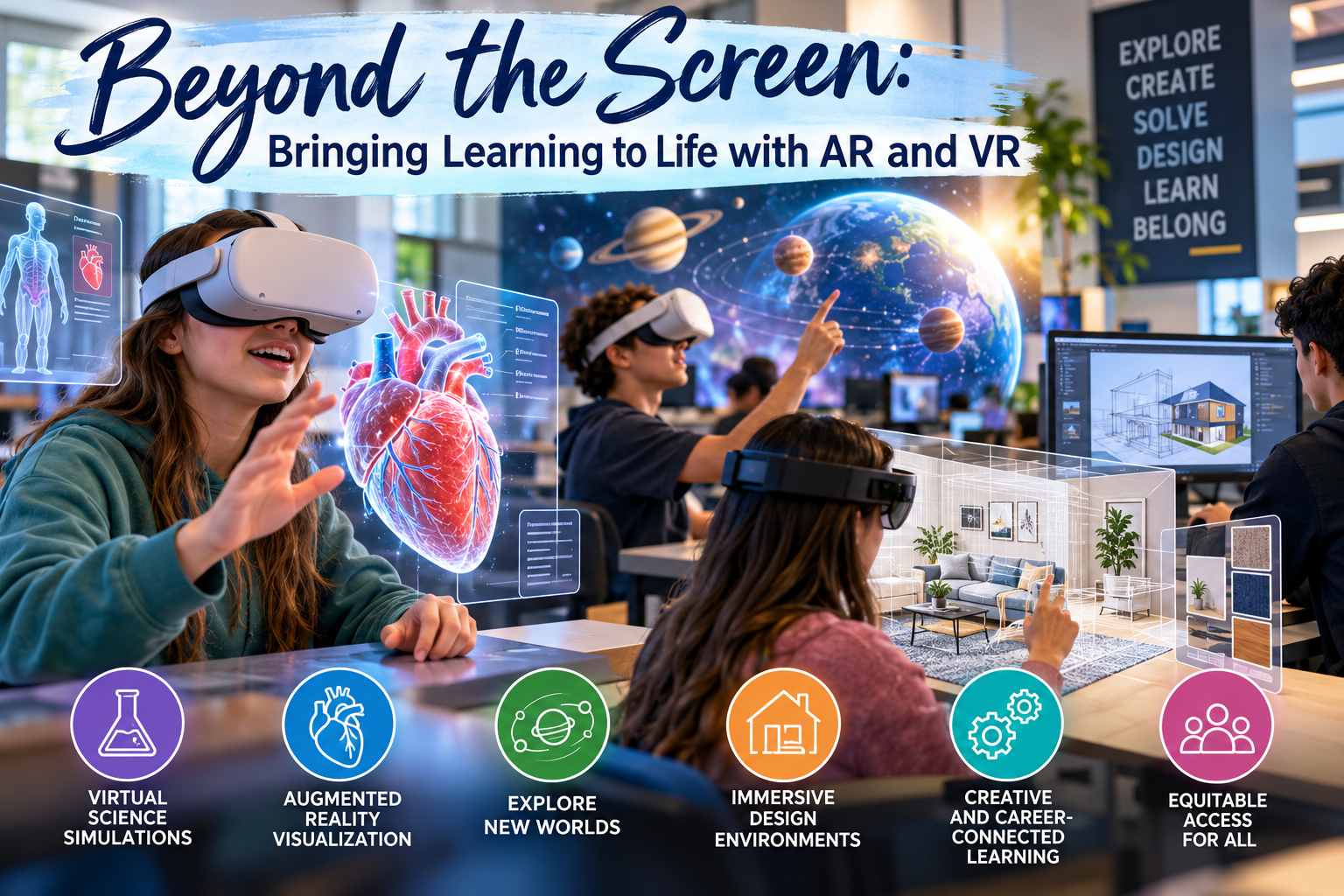
Image generated using ChatGPT
I recommend introducing three components to the proposed lab: virtual science simulations, augmented-reality visualization tools, and immersive design environments. High-performance desktop computers would support demanding applications, while laptops and compatible mobile devices would offer flexible alternatives. A small number of shared VR headsets could be introduced through a pilot program before expanding access. Teachers would receive professional development on instructional design, accessibility, student safety, and meaningful assessment.
The value of AR/VR goes beyond introducing new technology. These tools offer students opportunities to practice challenging skills, explore careers, collaborate on projects, and demonstrate understanding in diverse ways. However, successful implementation requires careful planning, including accessibility accommodations, equipment maintenance, software costs, and non-immersive alternatives for students unable to use headsets.
I recommend approving a phased AR/VR pilot within the existing computer lab proposal, starting with shared equipment and instructional activities aligned with curriculum standards. By evaluating student engagement, learning outcomes, and teacher feedback, we can make informed decisions about future investments. Our goal is not to introduce technology solely for its novelty, but to create meaningful learning experiences that would otherwise be difficult or impossible to provide.
References
Akgun, M., & Atici, B. (2022). The effects of immersive virtual reality environments on students' academic achievement: A meta-analytical and meta-thematic study. Participatory Educational Research, 9(3), 111–131. https://doi.org/10.17275/per.22.57.9.3
Chen, C.-C., Chen, H.-R., & Wang, T.-Y. (2022). Creative situated augmented reality learning for astronomy curricula. Journal of Educational Technology & Society, 25(2), 148–162.
OpenAI. (2026). Student exploring augmented reality in a modern STEM computer lab [AI-generated image]. ChatGPT. https://chatgpt.com/
Stelter, A. K., & Kim, E. (2023). Looking through the virtual glasses: Exploring student experience with augmented reality in human anatomy courses. Journal of the California Dental Hygienists' Association, 41(2), 12–19.
