While social media is often linked to entertainment, it also serves as a valuable tool for professional learning. By mining social media, educators can intentionally seek information, identify credible experts, discover instructional strategies, and build professional connections. García-Río et al. (2022) highlight microblogging’s potential to support education and training, and Alshalawi (2022) examines how social media use relates to learning performance and student perceptions. The key challenge for educators is turning routine scrolling into intentional professional growth.
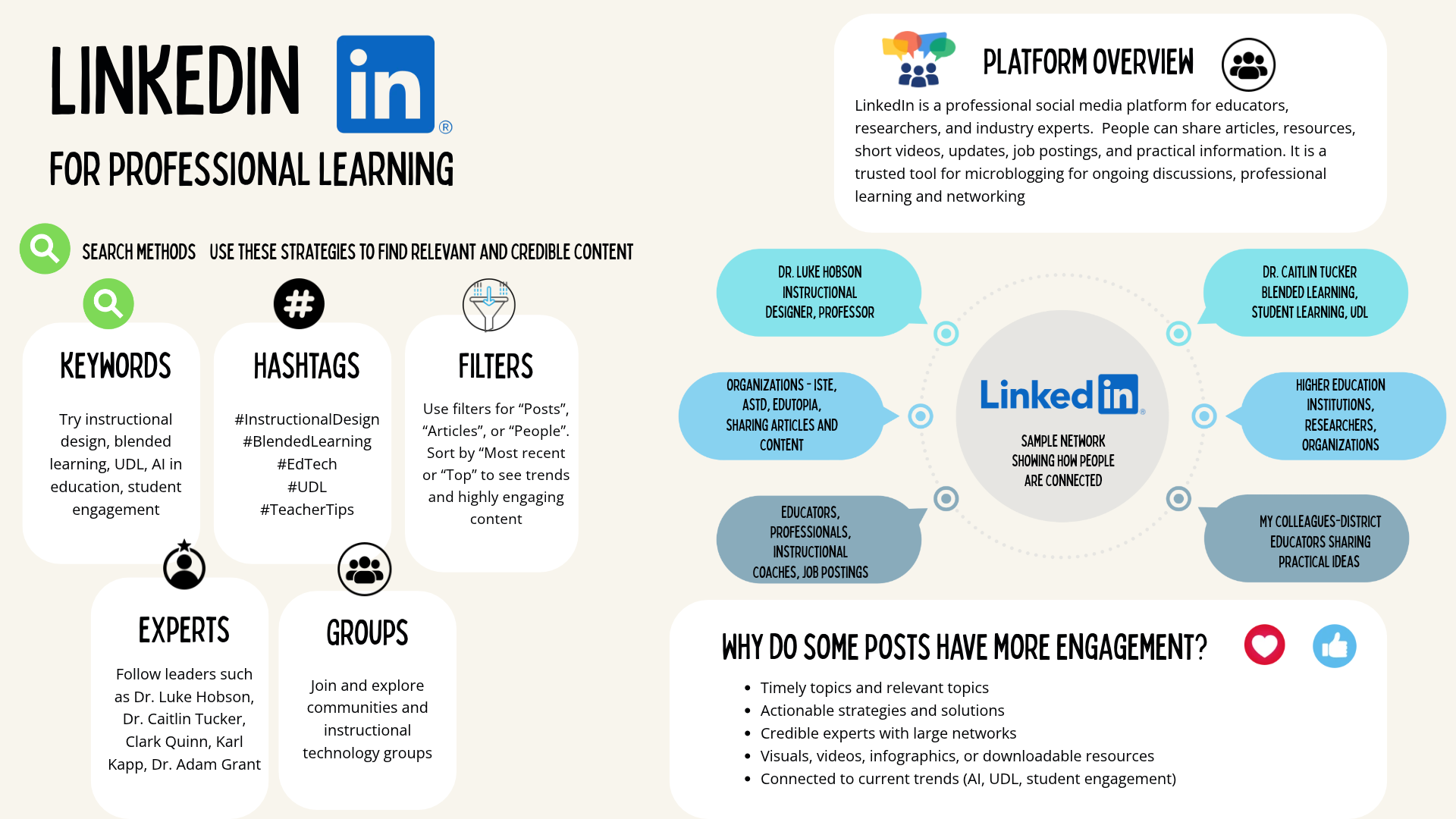
For this project, I used LinkedIn to explore instructional design, blended learning, and student engagement. My infographic demonstrates how educators can leverage keywords, hashtags, expert profiles, and professional networks to find relevant information. I identified two experts: Dr. Luke Hobson, who specializes in instructional design and online learning, and Dr. Catlin Tucker, who focuses on blended learning and student-centered instruction. Their resources provide practical ideas for creating flexible, engaging learning experiences. The infographic also features a network diagram illustrating how experts, educators, and shared resources support ongoing professional learning.
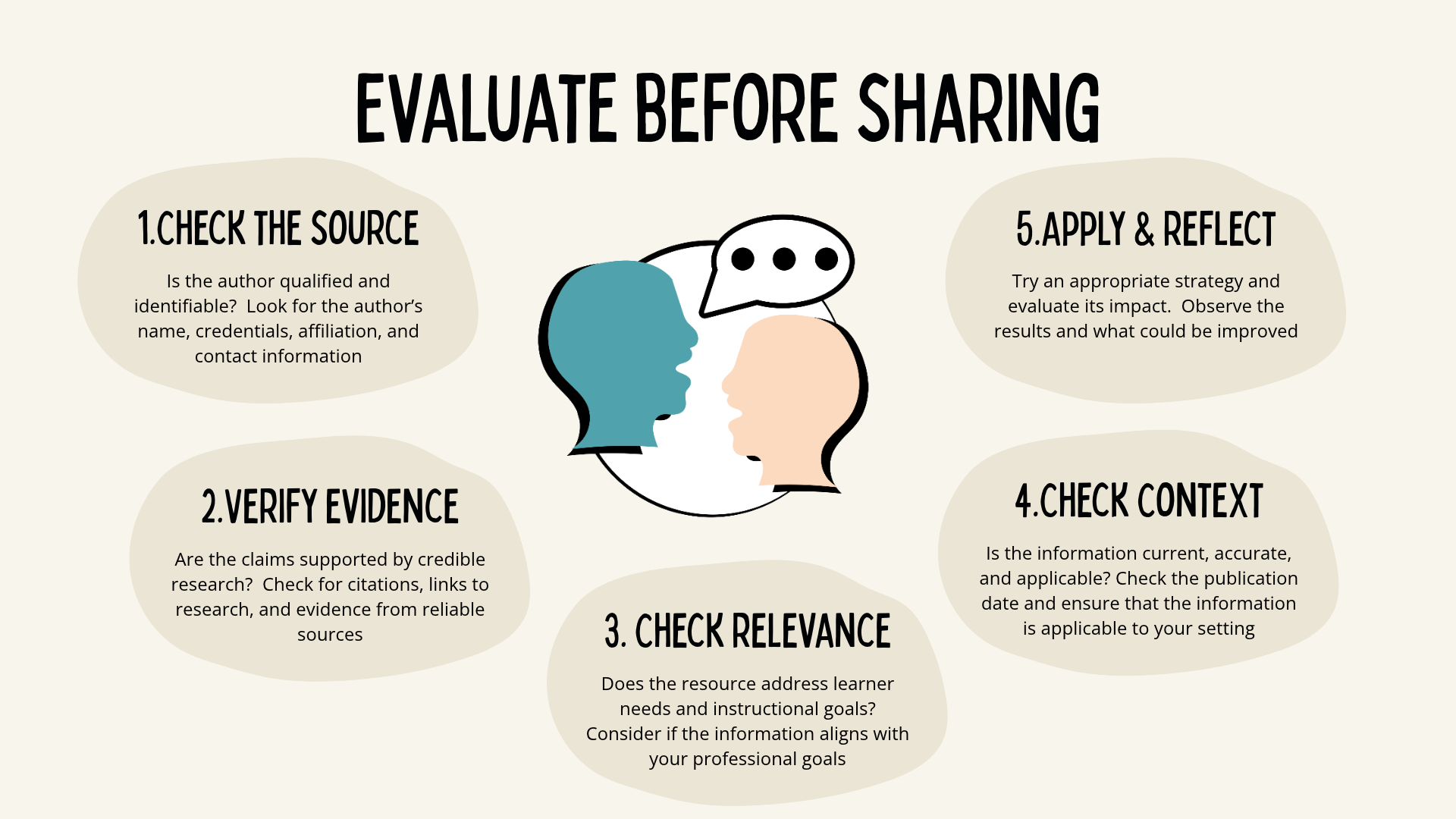
Finding information is only the first step. Educators should also assess its credibility, accuracy, and relevance. Before sharing a resource, I recommend reviewing the author’s qualifications, supporting evidence, publication date, and alignment with instructional goals. Paliath and Evangeline (2022) examine teachers’ perspectives on e-learning and social media, emphasizing the need to evaluate how digital platforms support educational practice.
Maximize social media mining by using platforms like LinkedIn, Twitter (X), Instagram, YouTube, and Facebook with clear professional learning goals, rather than browsing without purpose. Targeted keywords, relevant hashtags, and professional groups help identify valuable resources and connect with instructional technology experts. Following credible educators such as Dr. Luke Hobson and Dr. Catlin Tucker offers access to research-based strategies and emerging practices. It is essential to evaluate the author's expertise, verify information through reliable sources, and ensure recommendations align with student needs and instructional goals. Educators can strengthen their professional networks by joining discussions, asking questions, sharing resources, and reflecting on the strategies they have implemented. Dedicating time to explore, save, and organize useful information transforms social media into an intentional tool for ongoing professional growth.
As a high school teacher, virtual academy instructor, department head, professional learning advisor, and instructional mentor, I see opportunities to use social media mining for my own professional growth and to share resources with colleagues. LinkedIn allows me to explore blended learning strategies, find instructional design resources, and connect with educators facing similar challenges. Instead of just collecting ideas, I aim to test strategies, reflect on their effectiveness, and share my findings with my professional learning community.
How do you use social media for professional learning? I encourage colleagues to share their favorite instructional technology experts, hashtags, or resources so we can continue learning together.
References
Alshalawi, A. S. (2022). The influence of social media networks on learning performance and students’ perceptions of their use in education: A literature review. Contemporary Educational Technology, 14(4), 1–20. https://doi.org/10.30935/cedtech/12164
García-Río, E., Baena-Luna, P., Palos-Sánchez, P., & Aguayo-Camacho, M. (2022). Microblogging: An online resource to support education and training processes. Campus Virtuales, 11(2), 39–48. https://doi.org/10.54988/cv.2022.2.1013
Paliath, G., & Evangeline, M. (2022). E-learning and social media for ELT—Teachers’ perspective. Journal of Language Teaching and Research, 13(6), 1357–1364. https://doi.org/10.17507/jltr.1306.25
