Reimagining the Computer Lab
Designing a Space for Future Learning
Imagine a computer lab that is more than just a room with computers. Picture a space where students work together, create new things, and try out the latest technologies.
Technology is changing education, but old-style computer labs often fall short for today’s students. My $60,000 proposal for the ultimate computer lab brings together powerful computers, portable laptops, flexible furniture, and new technologies to make a space that is both engaging and accessible.
A Flexible Space for Learning
The new computer lab would accommodate about 32 students and support many subjects, including computer science, graphic design, business, and media production.
The lab would have four main areas for learning:
Independent Learning: Eight powerful desktop computers for coding, graphic design, and making videos.
Collaborative Learning: Twenty-four laptops on movable tables for group projects, research, and presentations.
Direct Instruction: An interactive screen for showing demonstrations, leading discussions, and giving short lessons.
Creative Exploration: Open work areas for hands-on projects, solving problems, and trying out new technologies.
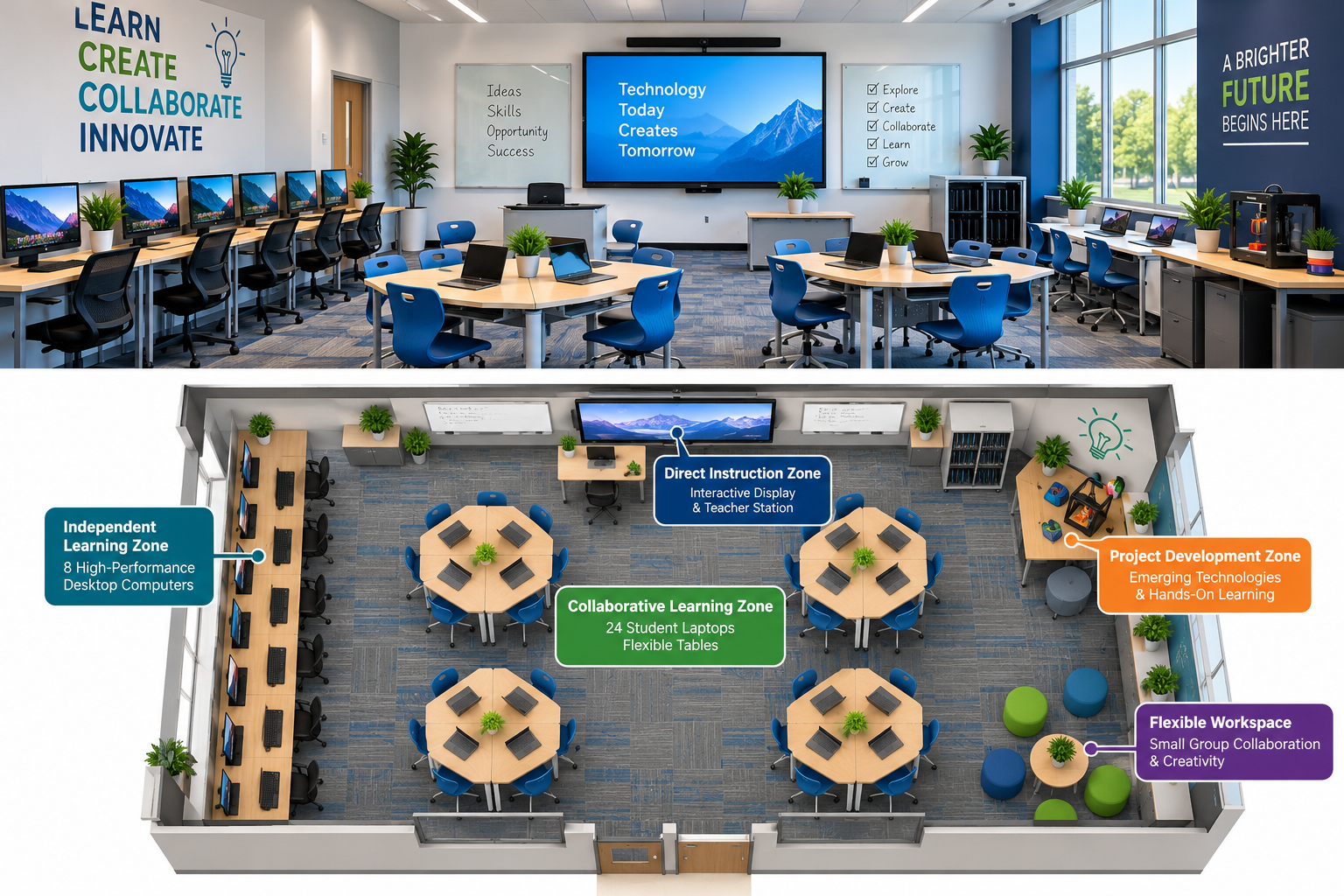
Figure 1. The proposed hybrid computer lab includes desktop workstations, tables for group work, and flexible spaces for teaching. Image credit: ChatGPT
More Than Technology: Investing in Student Success
The real value of this proposal lies not just in the equipment but in the new opportunities it offers students.
A modern computer lab can do the following:
Promote equity by providing access to technology students may not have at home.
Encourage collaboration through shared projects and problem-solving.
Support diverse learners through flexible learning spaces and accessible technology.
Build future-ready skills in digital literacy, creativity, communication, and critical thinking.
Sánchez Medero et al. (2022) show that digital tools such as blogging help students collaborate and learn from one another. Sharma (2022) also explains how blogging and professional platforms help students build communication skills and real connections. These studies show why it is important to create spaces where students use technology to collaborate, share ideas, and develop real digital projects.
Designing for the Future
The best computer lab is more than just a place to finish digital assignments. It should be where students create, work together, and solve problems.
By spending $60,000 on flexible technology and teaching tools, schools can provide students with valuable learning experiences and help them prepare for a digital future.
The goal is clear: create a learning space where technology helps students, sparks creativity, and leads to new opportunities.
Join the Conversation!
If you could design your ideal computer lab, what technology or type of space would you choose first?
Share your ideas in the comments!
References
Sánchez Medero, G., Pastor Albaladejo, G., Medina, P. M., & García Solana, M. J. (2022). Blogging as an instrument for co-creation and collaborative learning in university education. Contemporary Educational Technology, 14(4), 1–16. https://doi.org/10.30935/cedtech/12555
Sharma, D. (2022). Making meaningful connections and learning workplace-like business writing through LinkedIn and blogging. Business and Professional Communication Quarterly, 85(3), 298–318. https://doi.org/10.1177/23294906221109188
